
Soulver
How to bring psychotherapy closer to people looking for help
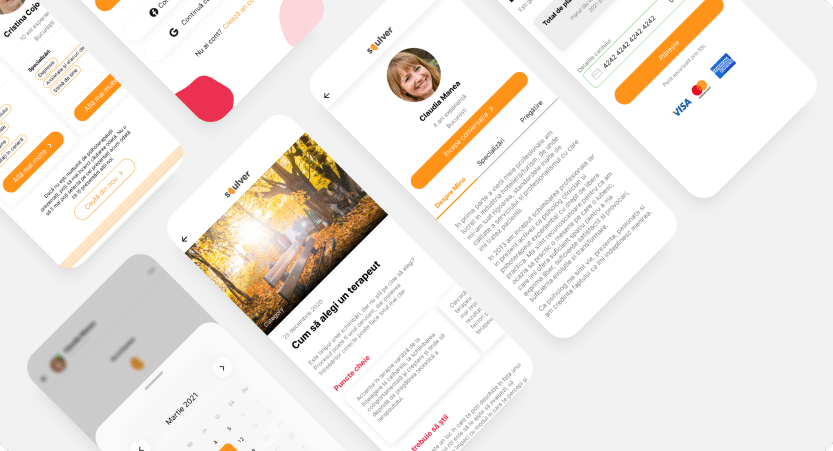
The client
Two aspiring entrepreneurs decided they want to enter the mental health industry to provide matching services and online psychotherapy via licensed practitioners to people looking for mental health help.
The challenge
Design a mobile app to provide:
- Matching clients to psychotherapists
- Online psychotherapy via text and video call
- Payments processing
- Sessions scheduling
The solution
A mobile app prototype, built specifically to test the need of such an app, and also serve as a demo for development teams.
Intro
The 2020 was a hard year for everybody, the level of stress and anxiety increased massively across the world. Add that to the level of anxiety without the global coronavirus pandemic and you will have the global anxiety pandemic (GAP).
I was part of a passion project to design the experience of better mental health through easy to find and access psychotherapists in Romania.
Problem
Talking about your mental health issues and what you are going through with someone close to you might raise some eyebrows.
Finding and talking to a licensed therapist is quite a difficult task. Especially if you want to be anonymous about getting help.
Although there are some digital solutions to solve this problem in Romania, we took the challenge to come up with a new solution in the market.
Roles & Responsibilities
I was a solo UX designer in a team consisting of two cofounders who came up with the idea.
The company had a name and branding done by an external agency.
We also worked with a brand positioning team to better understand the users we are trying to reach.
My Role
I facilitated a design sprint, designed the high fidelity interactive prototype for the app, and conducted user testing interviews via zoom, gathered feedback and insights.
Scope & constraints
The two co-founders have never been involved in the product development before, so I took an educators hat in this project, teaching about the ins-and-outs of bringing an app to the marketplace.
The project was self-funded by the co-founders, so it had quite a tight budget.
I tried to guide the project in a way that would not generate additional costs for no reason.
Product Process
- Design Sprint
2. User Testing
3. Getting estimates from dev teams to build the app
4. Investors Pitches to get funded
5. Taking the no-funding route (MVP)
Discovery
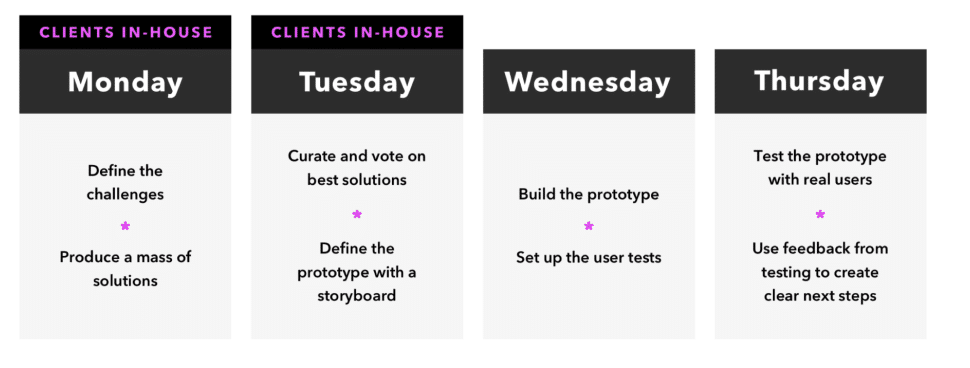
To get things going after our first meeting with the entrepreneurs, we’ve scheduled a couple of hours each day of the week for a design sprint workshop, to learn about what we want to achieve from this project, what problems we are really trying to solve and for who.
We’ve gone (somewhat) successfully through all the steps of the design sprint. At the end of the week we had a concept ready to be transformed into a prototype for a mobile app.
The design sprint
During the sprint, we’ve identified the key moving factors of such a business and what problems there currently exist in this industry.
Since this was my first facilitation of a design sprint, I found myself reaching for the “textbook” before every meeting in order to get a better understanding of the outcomes at the end of the meeting.
I tried to fit into the design sprint 2.0 by AJ & Smart, but found it difficult to keep up with the schedule. Most of the activities were delayed by a day or two. I tried to keep the activities time constrained by putting a deadline on the deliverables on the second day, so we can jumpstart into what we had planed.
Nevertheless it was a fun and engaging experience.
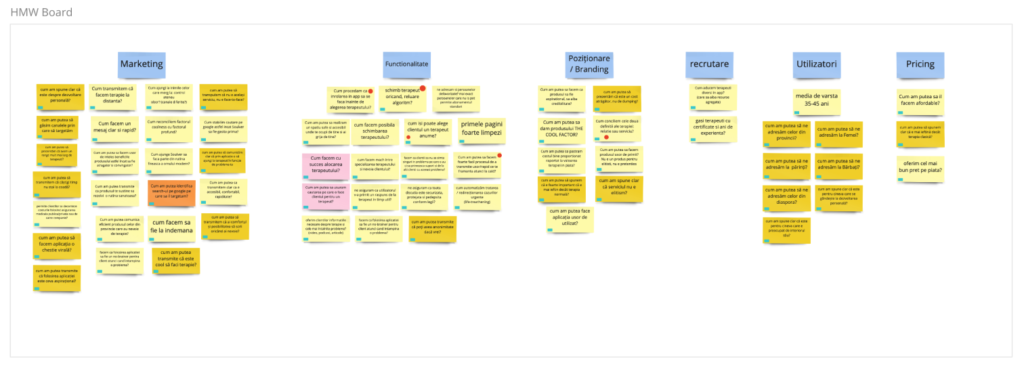
We started asking questions
The founders had identified this unfulfilled niche and did a bit of research, we dug a little deeper with how might we statements
At this point I realised that our workshop is missing some key stakeholders
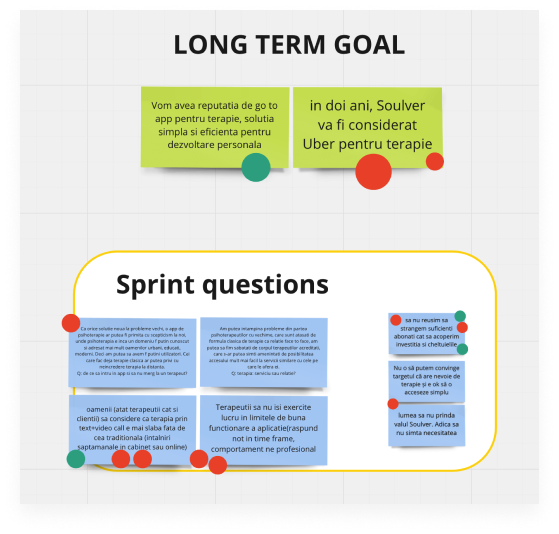
Going long term
Setting up a long term goal got a bit scary, because the founders had to think deeper into why they started what they started. It kind of forced them to embrace the growth mindset and reach for the moon.
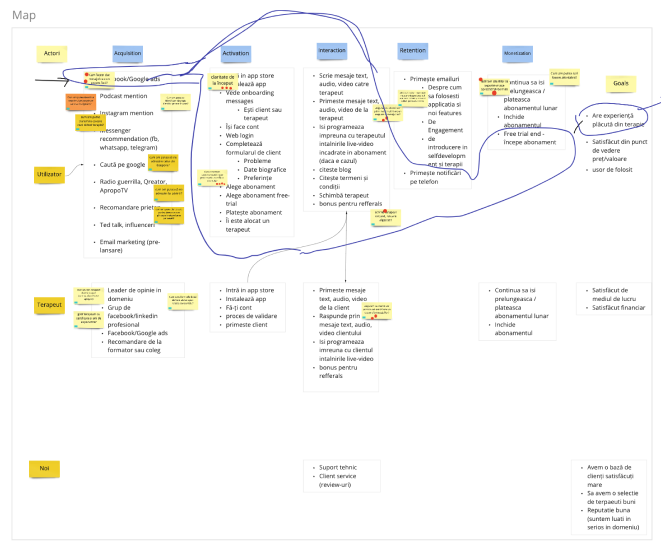
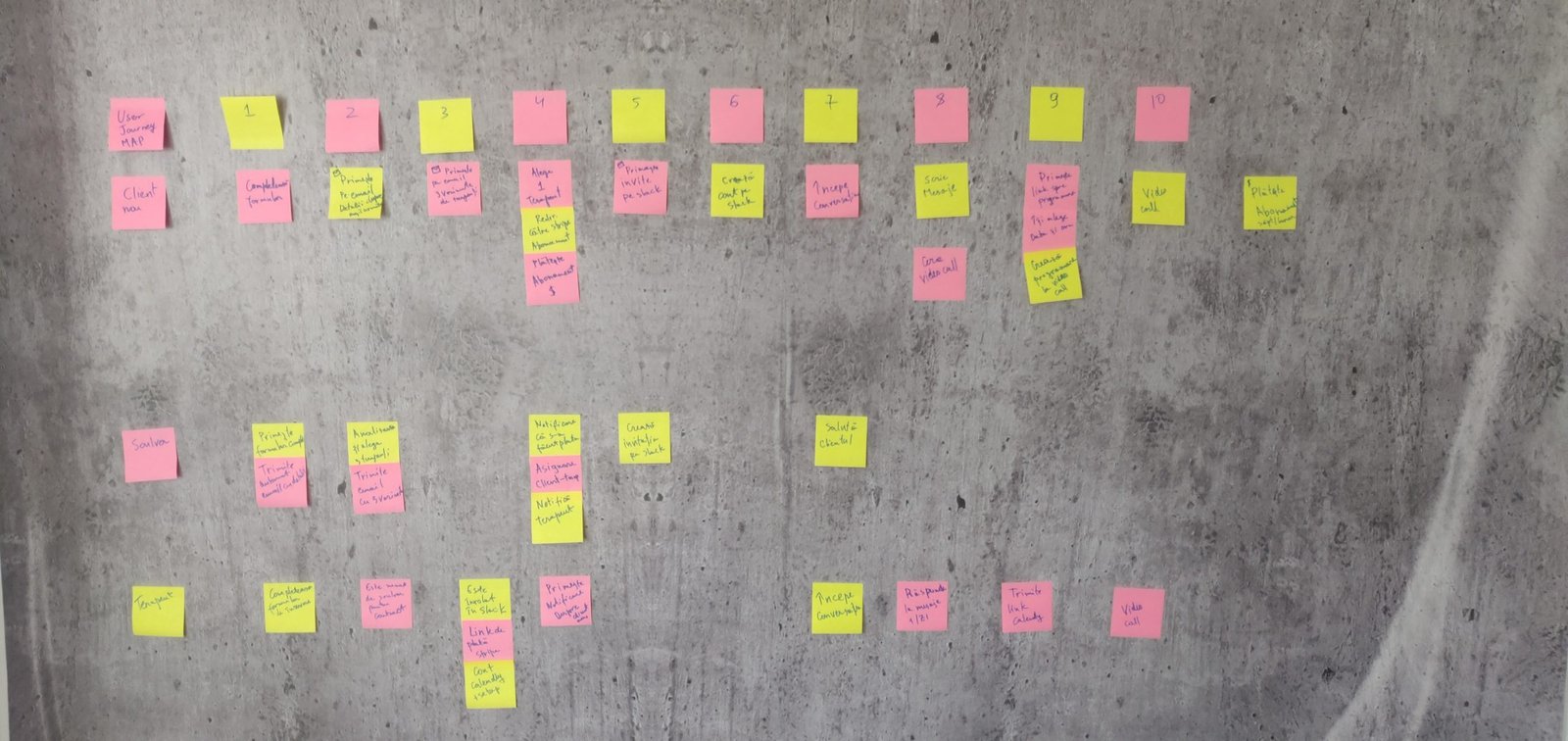
User Journey Map
We assumed a very optimistic Customer Journey Map. We outlined the actors and the actions to be performed involved in this service.
- End-users
- Therapists
- Operational team (soulver)
It was at this stage when the founders realised how much work this business involves.
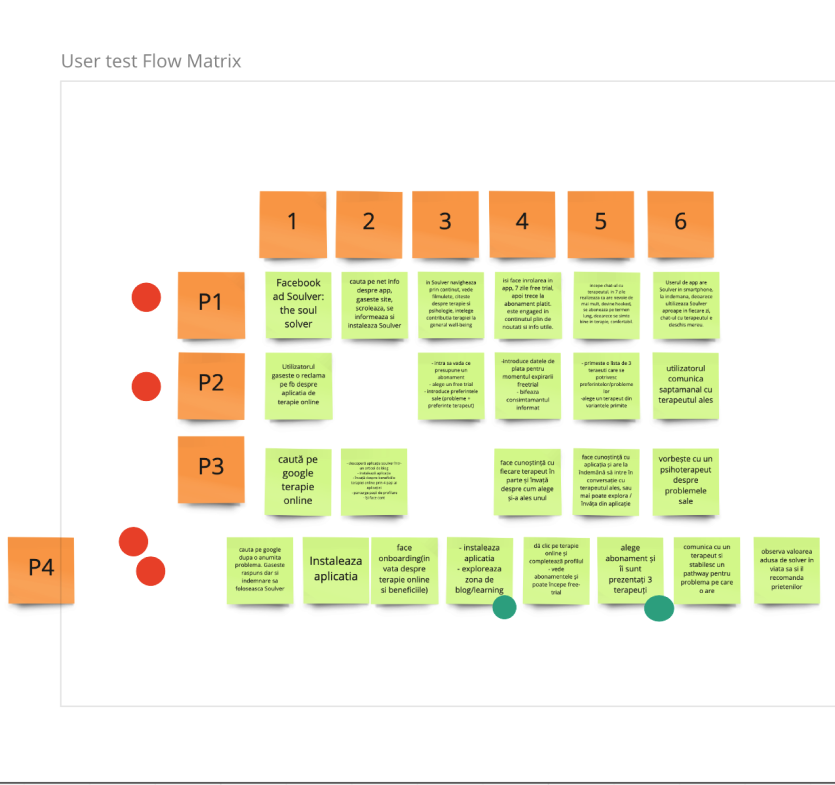
User Test Matrix
After we’ve explored different possibilities to achieve our app’s goals, we’ve gone ahead and came up with some potential test flows. The final flow contained steps voted by the majority.
This is where the app will start to get “materialised”.
The mobile app prototype
Designing the first iteration
For the first iteration of the potential app we’ve gone with the assumption that people would need to gain some trust in the app before they would decide to pay for it, so we’ve sketched a “learning section” inside the app, so users can first learn a bit about psychotherapy and get in the mood.
The concept of the app itself is inspired by the US competitor apps “BetterHelp” and “Talkspace”.
The app was designed in order to fulfill the most important user flow, the one on which a user gets to talk to a therapist in a very simple manner. I call it the “happy task flow”.
The happy task flow for the app was:
- Find about the app through google ads
- Install the app
- Walk through the onboarding screens
- Create an account
- Enter the Homepage
- Click on “Start searching” CTA
- Fill out the matching form
- Learn about the subscription plans
- Select a subscription plan
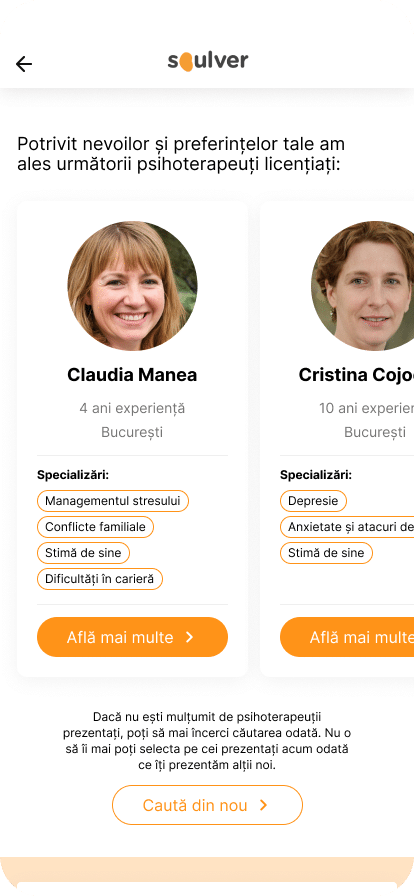
- Select a therapist from the list we provided
- Chat with your therapist.
- Good Job (Happy face)

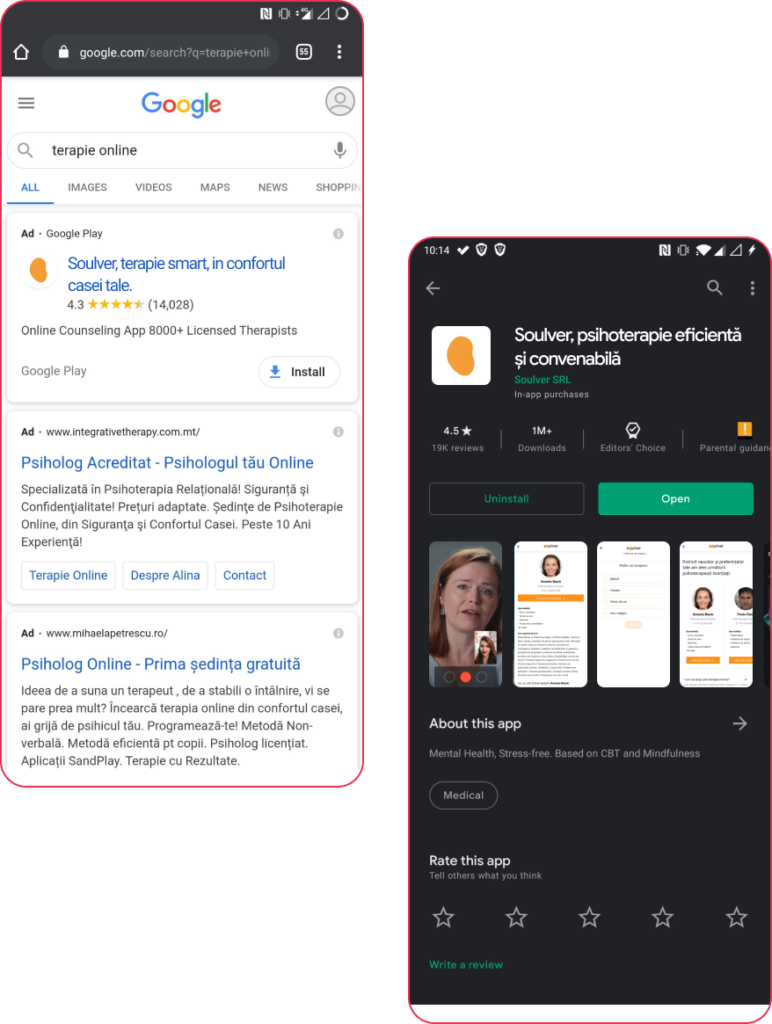
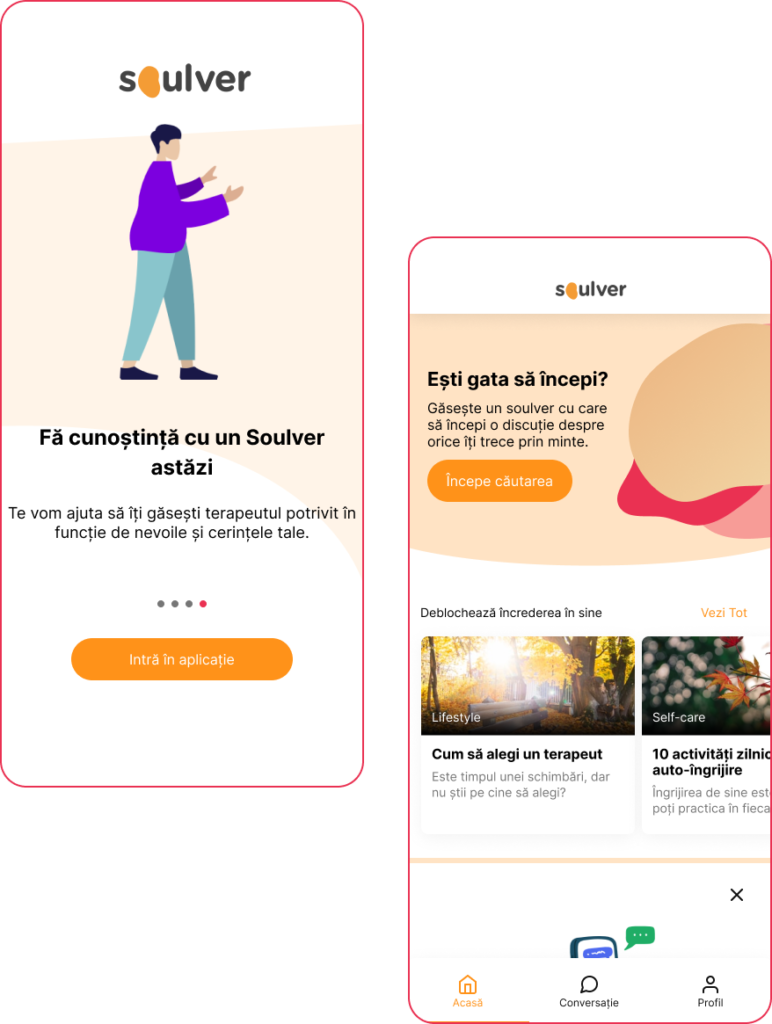
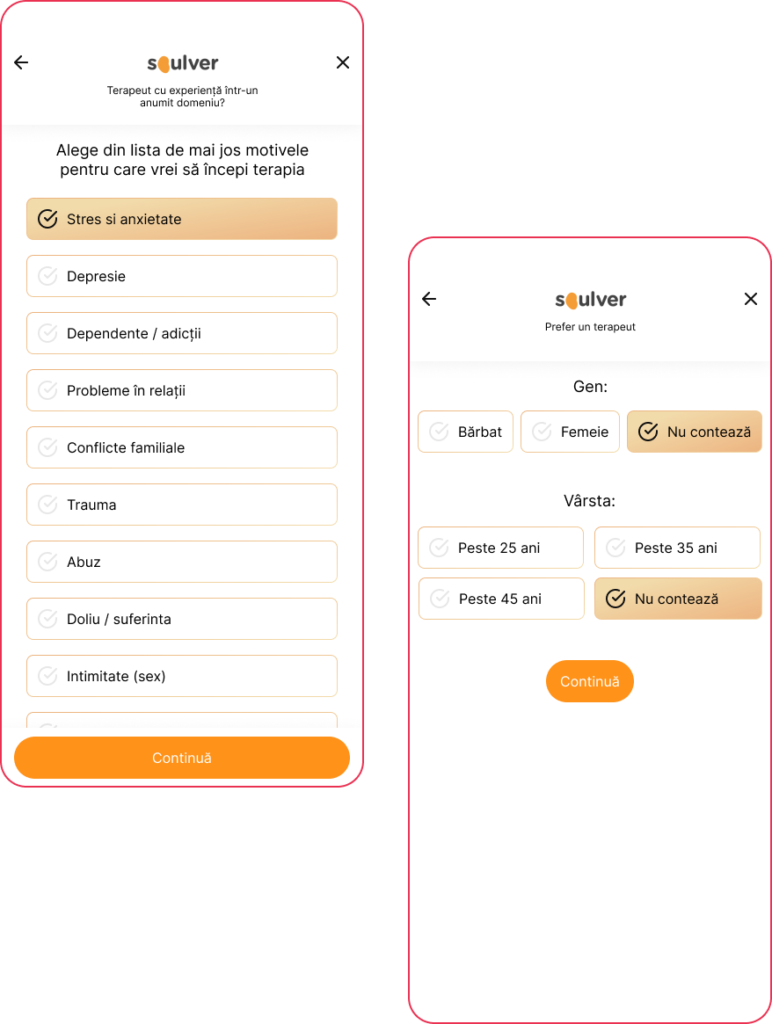
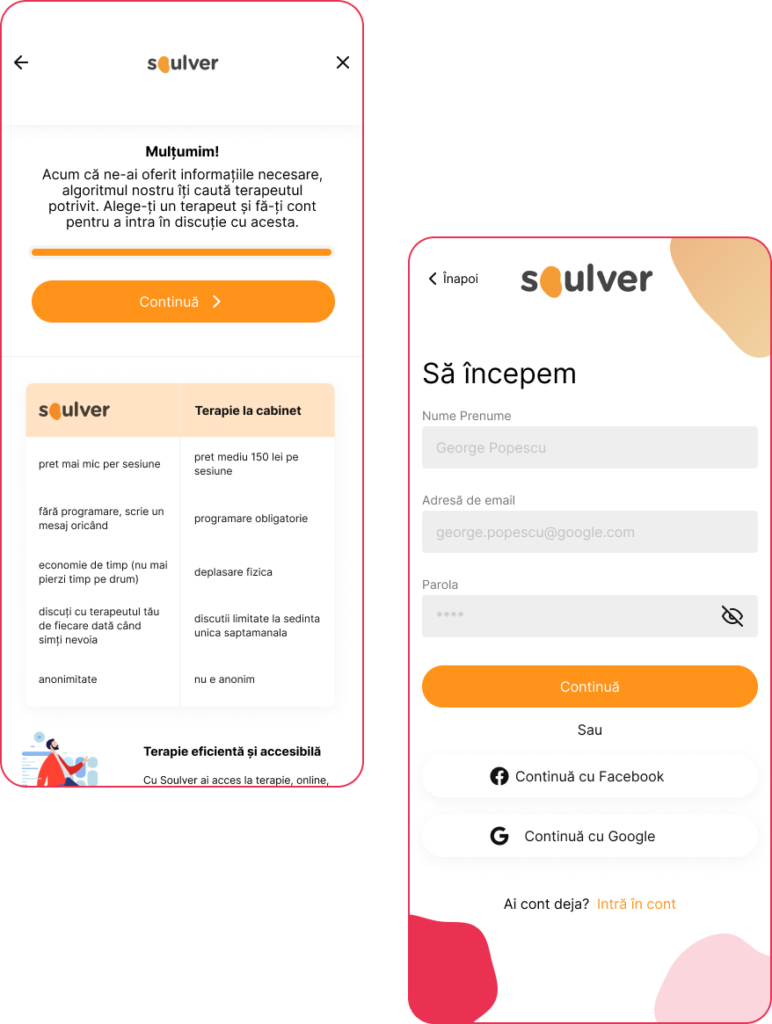
The prototype was tested using a group of founders’ friends, all in the same age group.
The first iteration got turned out with some usability problems as long with some user flow issues, which we will address in the next iteration.
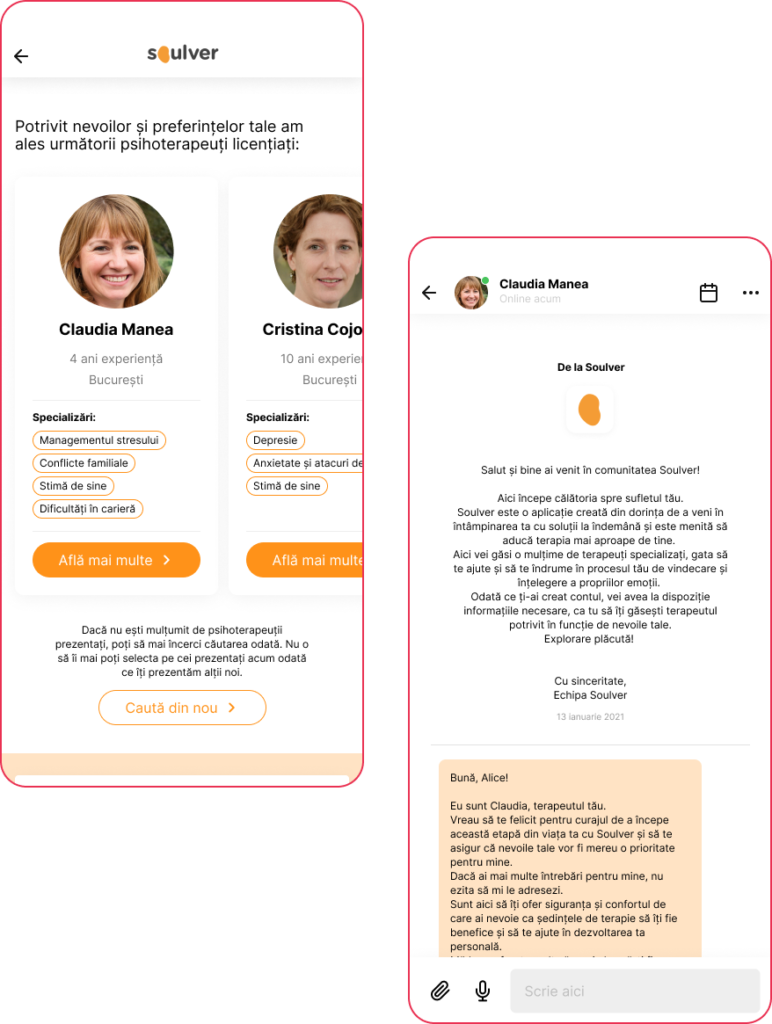
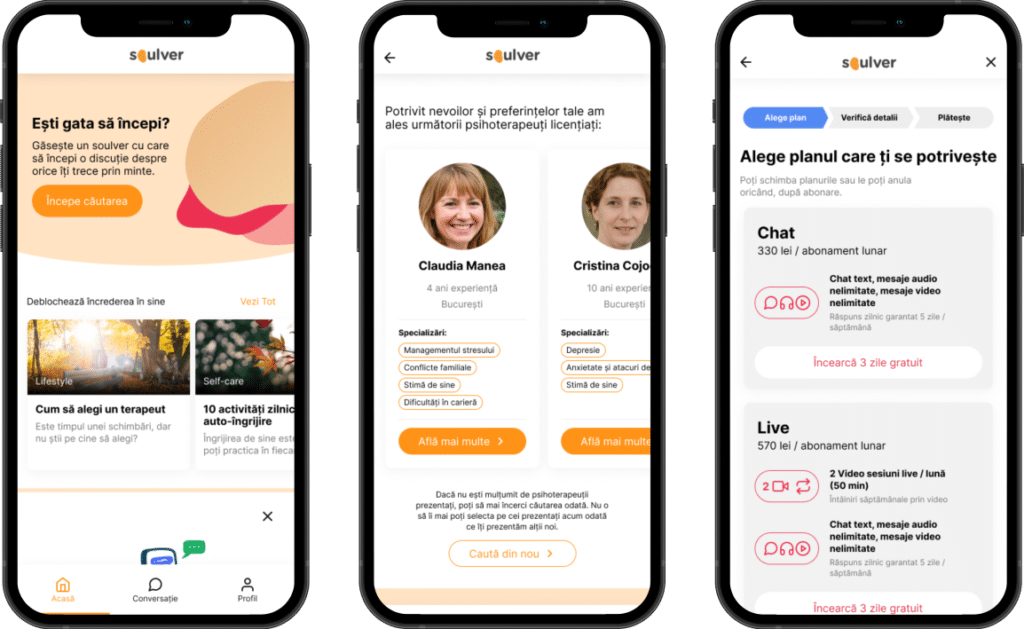
Implementing the feedback into the second interation
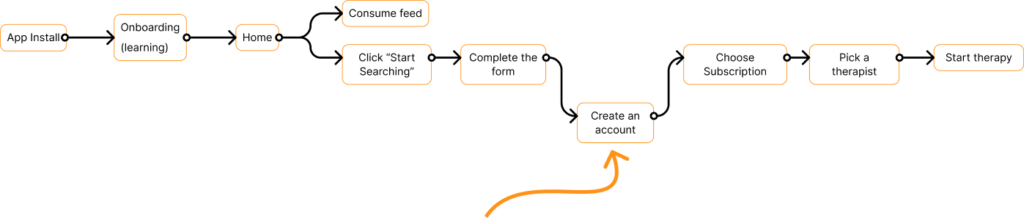
This bump over here is where the real magic is happening
That’s no secret that a lead is a sales funnel’s bread (conversion being the butter here). So convincing a stranger to give you their email address, in exchange for a solution to one of their pains, is something you would want earlier in their journey of easing that pain. Given the sensitive industry of mental health, this step is crucial as we will later discover.
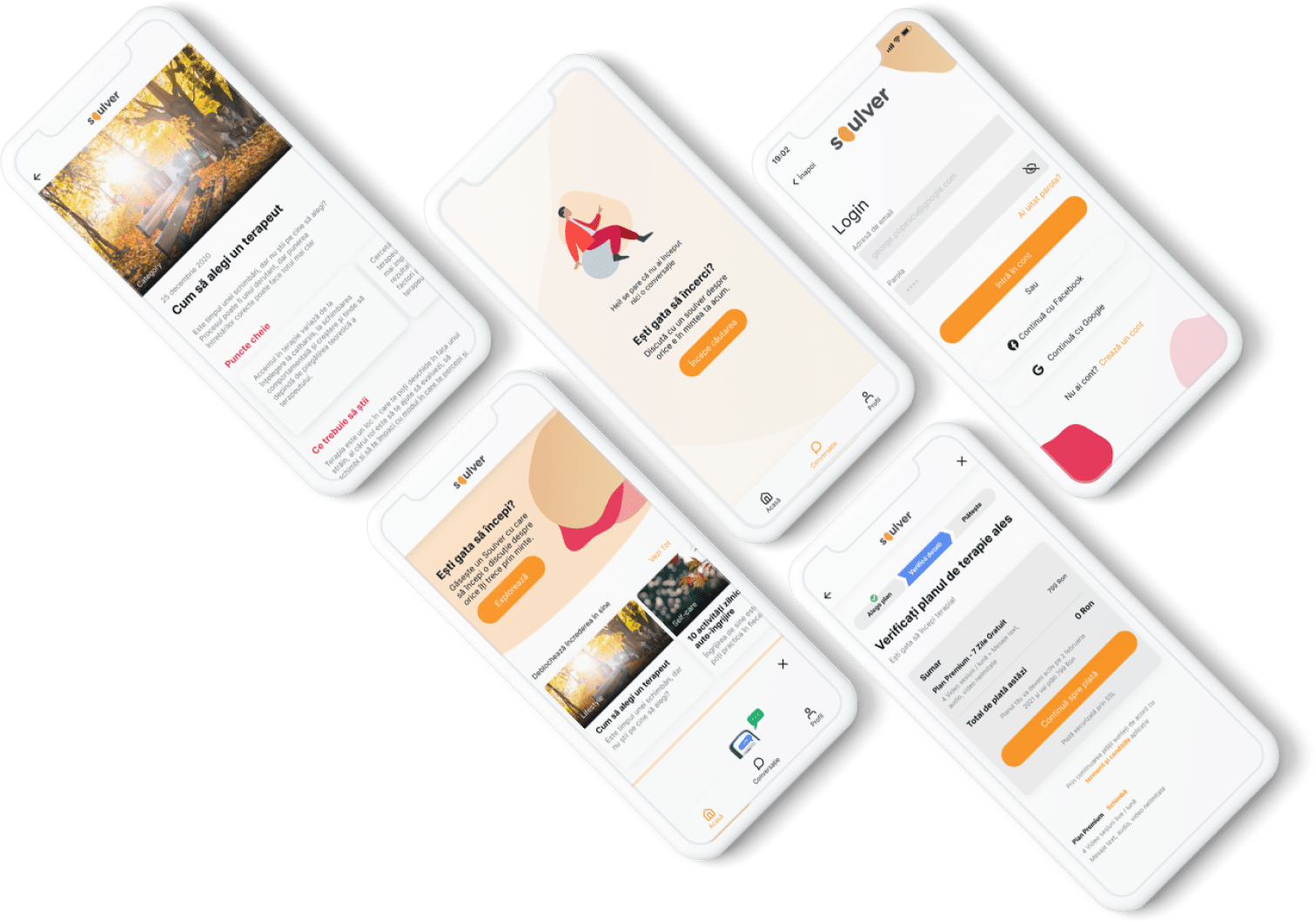
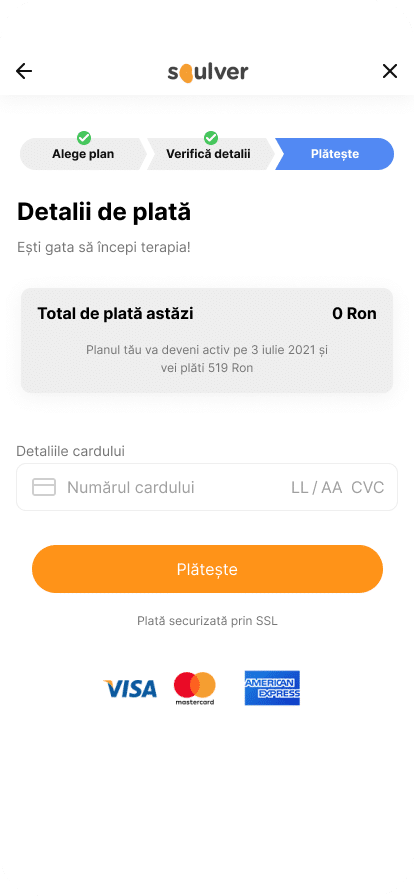
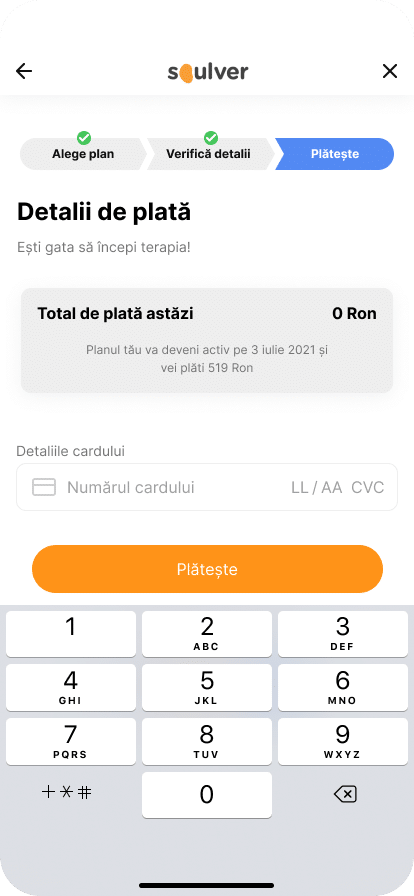
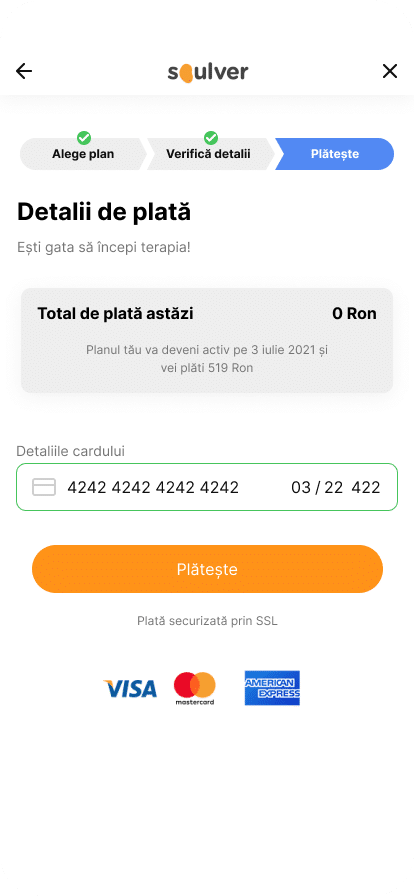
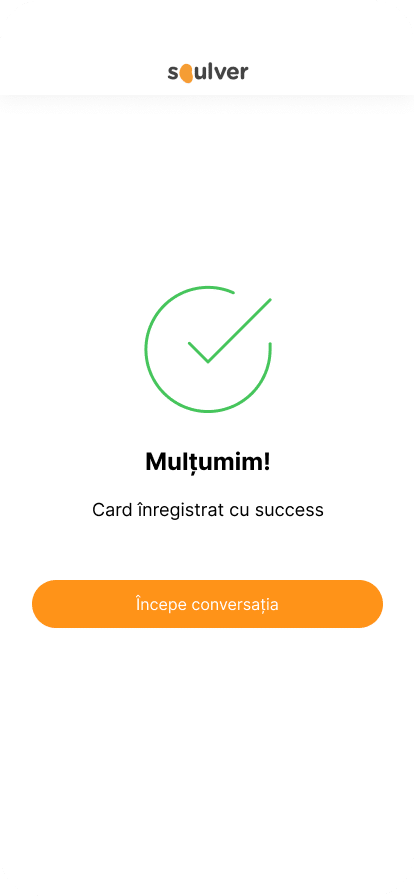
I designed a few more screens to give the prototype a more finished look.
Namely, what happens after you select a subscription plan, i.e. the checkout
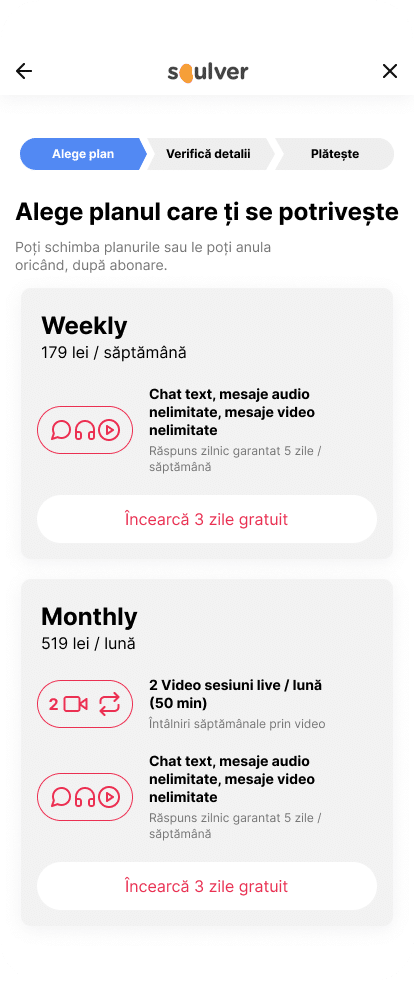
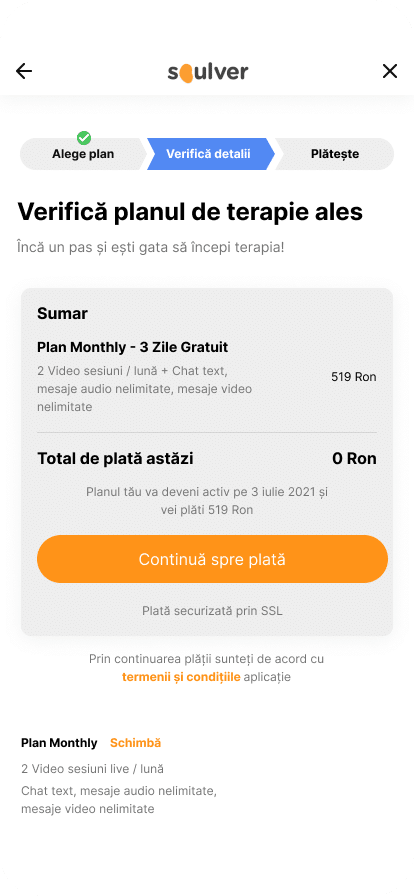
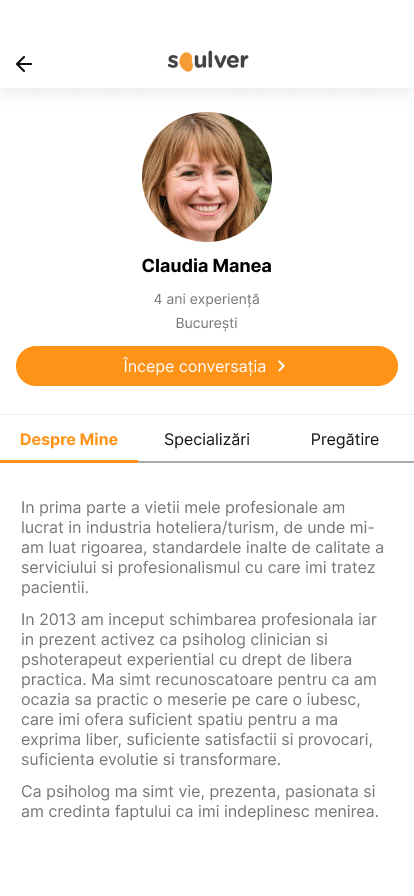
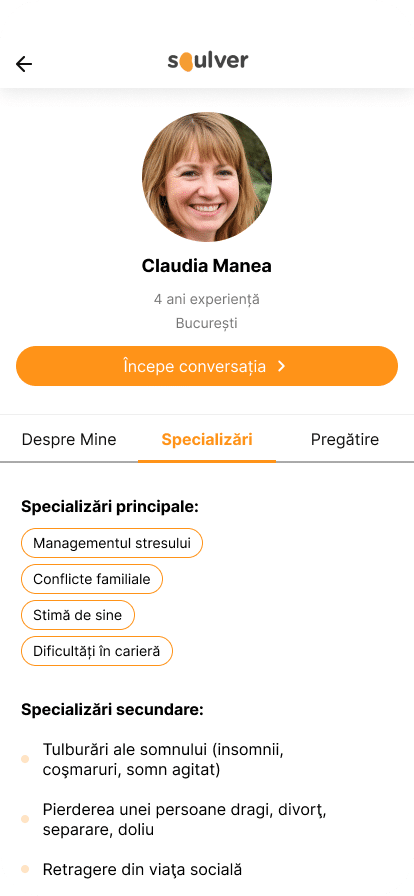
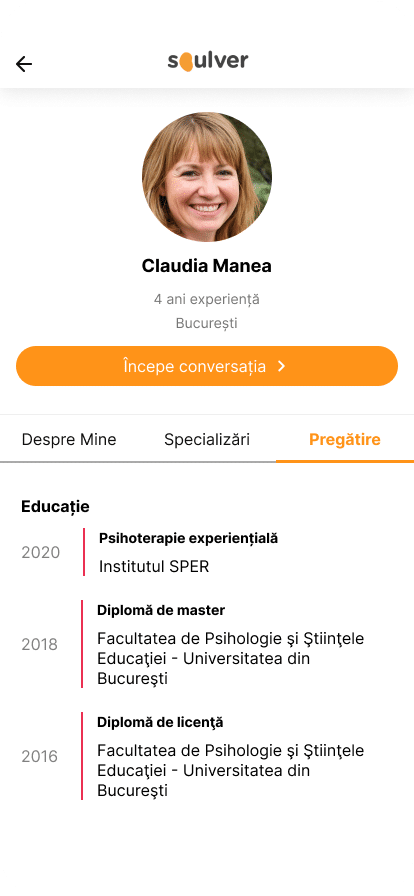
Another important aspect was to attract a user to “buy” on the therapist profile which we will later call the “Product Page”
In this iteration the profile has more info about the therapist
Conclusion
The prototype received a positive feedback from over 15 user interviews held in the two design iterations. The prototype’s main purpose was to test whether people will use an app to find a therapist and pay a subscription. I saw a big pushback when users saw the pricing model and they started comparing the “in-app therapy” with in-cabinet therapy, making notes like
- “well I guess you get the benefit of not leaving your house”
- “talking to my therapist through text would be interesting, but how does that work…?”
- “Seems expensive, I would calculate to be like to in-cabinet sessions”
What happened next?
Service MVP
Building a business using the lean startup and Jobs-to-be-done
Coming soon…